

10.01.2026
CPR and Greek law: when is the citizen-rescuer protected?
Written byDr.Evangelos Mastakas· LEGAD BA, MA, PhD IHL — Hellenic Air Force Officer
Cardiac arrest is a condition in which the heart suddenly and unexpectedly stops beating. It is an emergency that must be dealt with immediately, by providing Cardiopulmonary Resuscitation (CPR) and using an Automated External Defibrillator (AED), so as to increase the patient's chances of survival.
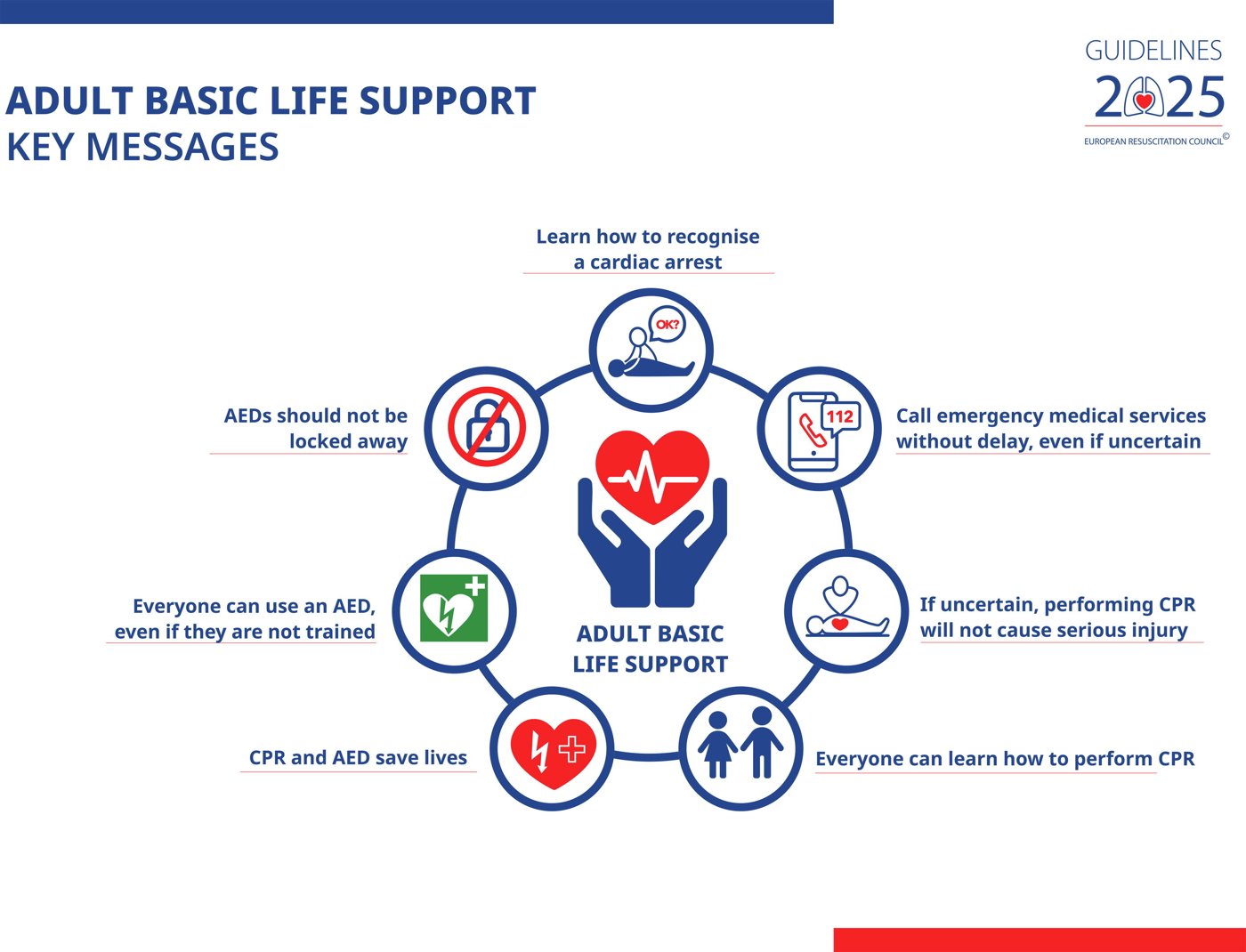
The chain of survival: the first step
Before any intervention, immediately calling 112 is the most critical step in the chain of survival, so as to ensure that specialist help is on its way.
Legal cover for the volunteer rescuer
Greek law does not explicitly impose an obligation to provide CPR by non-health professionals. However, through case law it covers those who voluntarily provide first aid to people experiencing a medical emergency (an act known internationally as the Good Samaritan Law), thereby protecting human life as the supreme good.
The first responder in a life-critical situation is protected by a combination of a series of legal rules, provided that they:
- Ask for permission to offer help.
Where a person is not in a position to give their consent to accept help (or a third party, as when accompanying a minor), the law accepts implied consent (Article 236 of the Civil Code).
-
Act in good faith, without asking for anything in return and within the scope of their training.
-
Use common sense, without putting themselves or the casualty at risk with outrageous actions.
-
Stay close to the patient until specialist help (the ambulance service) arrives.
This protection is decisive, as it covers the first responder against possible charges of non-intentional bodily harm (e.g. rib fractures during chest compressions) caused during the CPR process.
The risks of failing to help
Conversely, the failure to help by a person who is not themselves at risk of physical harm, towards someone in a life-threatening situation, may be prosecuted, as the fundamental duty of solidarity is violated. Prosecution may be based on the following articles of the Penal Code (PC):
- Article 25 PC – State of necessity that excludes the wrongful act
- Article 288 PC – Obstruction of the prevention of common danger and omission of owed assistance
- Article 306 PC – Exposure (endangerment)
- Article 307 PC – Failure to rescue from danger to life (omission of offering help)
Legislative framework for the application of CPR and AED
The Greek legislator has codified a series of rules which allow non-medical persons to apply CPR and an AED in a cardiac arrest incident:
- Presidential Decree 17/18-01-1996 (Gazette 11A) – Measures to improve the safety and health of workers at work (it lays the basis for first aid training in workplaces).
- Gazette 219/22-02-2007, No. Υ4α/οικ 15576 – Rules for organising a Cardiopulmonary Resuscitation system.
- Gazette 84/02-06-2010 (Law 3850/2010) – Code of laws for the health and safety of workers (Article 45).
Conclusion
Legislation in Greece is clear. It encourages the provision of help by citizens (first responders), giving them strong legal protection (Good Samaritan), provided they act in good faith and within the scope of their training. At the same time, it punishes indifference and the failure to help a person in immediate danger of their life.
Training in CPR is, therefore, an act of social responsibility and legal protection.
From reading to doing
These steps are taught and practised hands-on in our seminars.
Basic Life Support (BLS) →